We Will Remember Them

Although most collaborative projects this year connect my students with those in their age group, and another province, their latest Remembrance Day project meant connecting with primary grade 2/3 students from just down the hall.

The primary teacher, Pat Evers, and I started this tradition last year, after Pat shared the music of Joe Satriani’s, Ten Words.  In an interview, Satriani, one of the world’s top guitarists, told his audience that he wrote this song on the evening of September 11, 2001.

After all students listened to the song, the grade 7/8 students were challenged to write a phrase framing PEACE…..in Ten Words.  Grade 2/3 students wrote ten comments or words about Peace.  Following the writing, the intermediate students worked with their primary partners to create Wordles.  These projects were presented during the Remembrance Day assembly.

This year, our intermediate students and their primary partners, using VoiceThread, created a presentation  about Canadian WW II veterans.  To begin the project, students listened to many of the veteran’s podcasts posted in the “The Memory Project” and then chose one veteran to focus on.  The Memory Project offers an unprecedented account of Canada’s participation in the Second World War through thousands of firsthand veteran testimonials. Each testimonial includes a podcast, narrated by the veteran, and a text account, making it a perfect site for students of all reading levels.  The site allows students to search for veterans based on many criteria such as name, service, campaign and battle.

Pat and I noticed a transition that took place with the students as they worked through the project. Younger students, who often view war as “shooting” and “bad guys”, began to understand the sacrifice and sadness of war for the common people on both sides of the conflict . The older students became teachers, guiding their young partners through the process.  They helped to coach meaningful quotes and connections from their little partners after listening to the veteran’s stories.  Often it was everyday reflections that connect the younger students to the veterans’ experiences.  These little details transformed the veterans from mere names to real people.

“Olive had two brothers.  I have three brothers.  I think she wouldn’t have missed them for a little while, but then she’d miss the things they did to bug her.” Makenzie, Gr. 2

“When Harvey Douglas Burns was part of the Navy, the boat he worked on had only two or three washrooms for sixty other crew members.” Breelle, Gr. 3.

Once their scripts were written, the intermediate students uploaded an image of the veteran into a collaborative VoiceThread, and helped their little buddies record their thoughts.

Some students, like Shelby and Josh, focused on a positive message, such as that of Burton Edwin Harper.  “Burton dragged himself to a house after being wounded, and found a nurse to care for him.  He and that nurse recently celebrated their 64th wedding anniversary.”

Garrett, in Gr. 3, was impacted by the words of Norman G. Dawber and shared his words. “Norman said he was surprised that the birds were still singing, even though gunfire and cannons were going off everywhere.”

Tanner, Gr. 7, shared the story of Mendel Thrasher, ending with Mendel’s words, “Terrible things take place through wars.”

Each intermediate and primary pair of students made this year’s Remembrance Day ceremony their own – something they will never forget.  It’s one of the most poignant teaching experiences of the year for both Pat and I.

Thanks Pat, for sharing your students, ideas and enthusiasm for this project.  H.D.

View the completed project:  The Memory Project VoiceThread 2010


Holocaust Education via @langwitches & Group Skype

This week, the Idea Hive experienced a significant “first”:  a shared read aloud of The Book Thief using Skype, backchannel chat, and Linoit, a virtual bulletin board.   In previous posts, Clarence shared the beauty of this story, and the pre-reading activities leading up to the book, designed to develop students’ knowledge of Germany in WW II.  In the Hive Thinking classroom, students collaborated to produce research summaries of various topics including Hitler Youth, Jesse Owens, Hitler, Kristallnacht, and the Holocaust.

Following this step, students viewed a video created by Silvia Rosenthal Tolisano, Kristallnacht- Night of the Broken Glass.  While viewing images, including many of her Jewish grandparents in Germany, Silvia narrates her family’s story surrounding that horrific night on November 9, 1938, when Hitler showed the world his plans for the Jewish community. Please take the 9 min. needed to view her story.  I assure you it will be worth it.

The next day, the Idea Hive students met via Skype to share questions they planned to ask Silvia in a follow-up group video call, a new Skype feature.  During that group video call, it was incredible to watch students in Ontario and Manitoba listen and interact with Silvia as she spoke to us all from Florida.  This call allowed our students to experience together, the emotions shared by Silvia, as she answered their questions.  Silvia helped students learn how similar behaviours are mirrored today in social media sites such as Facebook.  Students connected, as they learned together in an authentic environment.  One of my student’s parents shared the impact this experience had on her daughter.  “When she came home, she talked and talked about the Holocaust.  She cried.”

photo

After the call, I asked my students to share their thoughts on how Skype affects their learning.

When we Skyped with Silvia, what happens years ago, makes more sense. She told us way more than I’d read in a textbook. She made me put myself in Germany during the night of broken glass.

When you’re talking to someone on a Skype call, with people around the world telling their story, you realize how really brave they are, like Silvia. They inspire us to share more of our experiences.  Brad P.

Skyping helps us learn. When our class Skyped with Silvia Rosenthal, she told us more information about the holocaust and WWII than a textbook would have told us. This makes it exciting for us because we can see her expressions and it makes it more real.  We can feel her emotion.

In order for this to work, there must be preparation involved so you have a reason to Skype. Preparing for a Skype call is just as important as studying for a test or practicing a speech for your History project. We prepare because it helps us present the information the way we want it to sound. We also prepare so there is a serious conversation, and so we don’t stumble over words as we are speaking to our audience. Ethan J.

During the Skype call, the students are very quiet and involved.  We are very interested with the call because we are not just reading a boring old textbook.  We are hearing somebody’s story. When we had a Skype call with Silvia on Monday, we got into it, asking questions that we’d previously planned.  And we all know you cannot ask a textbook questions!  If you have access to this technology, why not use it?!  Alyssa H.

The group Skype feature enables our students to share powerful, emotional learning experiences together.  It’s another step in our year-long goal of creating a community of learners in the Idea Hive.

Creating Connections in the Idea Hive Classroom

The collaborative project with Clarence Fisher’s class from J.H.Kerr Public School in Snow Lake, Manitoba, is heading into its 7th week.  The connections have begun.  During the first week of school, using Google Forms, both classes from the Idea Hive completed a survey about their personal interests.  Last year, I created this survey as a way of getting to know my students; this year the Idea Hive students used it for the same purpose.  Once the survey was complete, all students had access to the results once the spreadsheet was “shared”.  After reading the results, looking for similarities and differences, each student wrote their first blog post.  Even though we’re 2 700 km apart, they were surprised with the results.

I have more in common with the Idea Hive then I thought!  Alyssa H.

During the next-step Skype call, we had an Idea Hive class discussion about commenting, highlighting how to continue the conversation.  In order to make sure every student received a comment on their blog from the opposite school, we assigned everyone the names of at least two students. Students were also encouraged to connect to any and all student in the Idea Hive.

Relationships are stronger when you can put a face to a name, and so the Flickr photo contest began.  Wearing the Idea Hive button, students posted pictures of themselves on the Idea Hive Flickr site.  Not only did students now know what each other looked like, but they also could see students in their respective communities, hanging out at the beach, cleaning horse stalls, outside the mining museum or in the soybean field. Students loved checking out the site to see who had posted – “Hey, she has the same shoes on as me!”.  Everyday lives, creating more connections.  The kids were thrilled to get coverage of the story in the local newspaper.

In preparation for Meet-the-Teacher night, I created this bulletin board to inform parents about the Idea Hive, and introduce them to their child’s new classmates from Snow Lake.  Parents also got to learn who the “other” grade 7/8 teacher is!

During our planning in the days before school started, Clarence had introduced me to the online book, Small Pieces Loosely Joined.  I loved working through this book for many reasons.  Rather than being filled with stories of how dangerous the web can be, it paints a picture of a beautiful community.  The web is a place where humans can share common interests with others; a place showing humans at their best.  During the classroom activities, students provided insight into how they use the web.  Following the reading, Clarence suggested all students create a piece of art based on the book.  Visual art is not my strength, so there was some discomfort from my end, knowing I was likely not going to be able to provide much guidance for my students.  But the kids didn’t need me; most loved the  freedom given to create their interpretation of the book’s message.

The thing I liked about my art work is that it was fun to make because I usually don’t do this kind of art at home or at school. Justin S.

Once the was blogs were posted, it was clear that Clarence and I had directed our students slightly differently.  While Clarence’s students focused on key words and their use of the web, my kids wrote about the theme of the book, and how they demonstrated this in their art.  They reflected on their work – what they liked, what they would change.  Since report cards comments were due in two weeks, I needed some reflective feedback from my students.  Working collaboratively challenges teachers who face different deadlines to creatively adapt projects to meet reporting requirements.  From the students’ perspective, they weren’t concerned with the difference; they were excited to have another opportunity to continue learning more about their new friends.

I am happy that you get to see what we did and  I’m looking forward to what you guys did. I  hope you guys are excited to see our stuff.   Cassidy

As this second set of comments are being written, it’s clear from the students’ questions that the connections are firmly in place. “When can I do a project with one of them as my partner?” and “Can I ask them to friend me on Facebook?”

Clearly they’re ready for our next steps which include a shared read aloud and a collaborative mapping assignment.  They’re having fun, they’re growing as a community of learners.  One of the Idea Hive students said it best….

The Internet brings us together ….isn’t technology amazing?  We are really not that different.  We both go to school so why doesn’t every class do this?  Avery B.

Take-off!

This year, the first week back to school has been filled with many “firsts” as my classroom in southwestern Ontario begins a year-long collaboration with Clarence Fisher’s (@glassbeed) class in Snow Lake, Manitoba.  While Clarence and I have collaborated with other schools before, they were for short-term projects.  In his recent post, Clarence clearly explains the value of a year-long collaboration versus the usual “sprints” as he calls them.  Idea Hive is the name of the community our students will meet and work in over the next year.  As our students develop their online communication skills, they’ll meet new friends and acquire the learning skills needed to become responsible digital citizens – skills that are essential in today’s global world.

As Clarence and I began our discussion, we looked for shared visions, curriculum and tools.  From there, we developed a number of specific projects that will take us into the first three or four months of school.  Other projects are percolating; we’ll revisit them as we move through each month.  Most importantly however, we planned to hit the ground running.

During the first day of school, my grade 8’s, who I’d taught last year, helped my grade 7’s as they were introduced to their Google Apps account.  Within a few days, our Idea Hive students completed an interest survey using Google Forms.  Through an introductory Skype session on day three, students got a chance to meet and ask questions as they briefly got to know each other.  Towards the end of the call, Clarence presented our Flickr photo competition.  Students are challenged to submit pictures of themselves taken in unique places, wearing the Idea Hive buttons.  Clarence had previously sent these buttons and magnets to me so we could distribute them to all students at the same time.  We were now connected.  Because of our very differing geographical locations, there are a lot of opportunities for picture settings unique to both classes. This is a great way for students to begin to learn about each other in their daily worlds.

Connecting the Idea Hive

Over a two day period, I felt like an orchestra conductor as I guided my students through the process of setting up their own WordPress blog.  Although I use WordPress, I’d never tried this feat with twenty-three 12- and 13-year-olds at once.  With patience on all our parts, we completed the task.  The students’ blogs will be an important communication tool throughout the year as students comment on each other’s posts.  This interaction begins next week, after students analyze the results of the interest survey to find similarities and differences with their Idea Hive peers.

There’s been a lot of “first” this week.  Showing our students we’re not afraid to take risks is an important part of the modeling process in our teaching practice.  We hope our students model our code of conduct when kinks and wrinkles occur in our plans (we know they will!) as they develop their problem-solving skills.

On a personal note, this weekend I thought about the importance of modeling this very same viewpoint as I experienced another exciting “first”.  My 17-year-old son is a new pilot, a recent  graduate from the Air Cadet program, and he intended on flying his plane to an airstrip closer to home.  I had the opportunity to go with him as his first passenger.  His mentors, both in their 70’s, knew he was ready for the flight home, and therefore so was I.  At the same time, I was nervous, realizing my child could not rely on me for help, but thrilled seeing that he has the confidence to know he doesn’t need it.

Learning with, and from our students and children sends a strong message.  We have confidence in them.  Taking risks inspires those around us to do the same, as they develop into life-long learners.

On the runway, full power – take-off!  It’s going to be an amazing flight.

Learning is a Global Collaborative Classroom Project with @scmorgan

Reflections by Susan Carter Morgan and Heather Durnin

Heather Durnin

Learning is about conversation. Over the past year, I have had the opportunity to participate in the Ontario cohort of the Professional Learning Practices (PLP) project. This project brings educators together to participate in self-directed professional development involving 21st century learning environments. By helping to create “communities of learning”, educators connect through a Ning for the opportunity to have important online conversations about the changing learning environment.

As part of the “Avon-Maitland After School Special” group cohort,  I had many conversations with Susan Carter Morgan. Susan is a grade eight teacher at the Fredericksburg Academy in Virginia, and was one of the resource people brought into the project to initiate and help develop discussions. As a result of our shared interest in a classroom where learning was more inquiry-based, we decided to develop a collaborative project.

Students from our two schools were grouped together to study an issue of social justice using web 2.0 tools.  These tools help students put the best practice of collaborative learning into play by working with others to problem solve.  Tools such as VoiceThread allow teachers to practice differentiated assessment. Being socially connected, students believe their contributions matter and they feel a stronger degree of responsibility to support their new partners. Students want an authentic audience to express themselves to.

Over a period of a few months, Susan and I developed the project, setting deadlines for each step and creating checklists and rubrics. Research would be collected and organized using Google Docs and Skype, projects would be presented using VoiceThread, and students would post comments on other groups’ projects in the final step.

During the month leading up to the project introduction, my students were involved in several activities focused on the Convention on the Rights of the Child and the Universal Declaration of Human Rights. Throughout the year, they had been immersed in questioning structure to develop critical thinking through board directed PD. Students in Virginia read To Kill a Mockinbird and studied social injustices. As a result, students came into the project from different perspectives, providing a rich mosaic of background knowledge.

To begin, my students set up a shared Google Docs research templates with their partners in Virginia.  Respectful discussions began, including topic choice and the development of their essential research questions. The students’ process mirrored the steps Susan and I had practiced a month earlier.

Using Skype in the classroom, students introduced themselves and developed relationships in and outside of school hours. Many days, rather than go outside for break, groups of students from both schools would stay in and Skype with each other. The chatting and laughter in the room was beautiful as students from both countries formed friendships not only from within their own groups, but others in the class as well. Meanwhile, Susan and I provided feedback as the students’ shared documents grew.

Yes, there were glitches along the way. Some students from both schools were away for extended periods, others struggled with the idea of having to develop their own research questions. They wanted to be told. But as the weeks moved on, the students pulled together and our classrooms became one. Their ability to develop and work collaboratively moved the project along, even if one of us couldn’t physically be in the classroom with them on a daily basis.

As the research was completed, students in Virginia set up the shared VoiceThread for the final presentation. Each group member posted a Creative Commons image and added commentary based on the research. Once the completed VoiceThreads were posted on the project wiki, students posted comments on other groups’ projects. In celebration,  our classes came together once again via Skype for an ice-cream sundae party. Afterwards, students posted their reflections about the project on a VoiceThread.

Every time we have a conversation with someone else, we open new opportunities to grow and to learn. So what did they learn? Our students started to think more about the meaning of community and the world than just themselves. They developed a global conscience and relationships with each other that continue on, even though the project is complete. The students however expressed it best.

“To me this project was a lot more than just trying to get a good grade. It was so much more. Because our social issues project was successful, despite some minor setbacks along the way, I think our class, and Mrs. Carter Morgan’s class in Virginia, have paved the way for a new generation of learning. No longer will students have to choose groups from their own classroom. Teachers now have the opportunity to assign group members from thousands of miles away, and that to me is extraordinary.”  Shawn K., Grade 8, Turnberry Central Public School

Thanks to the connection made through a PLP project, students and teachers from different countries have indeed experienced something very extraordinary.

Susan Carter Morgan (@scmorgan)

Though I have been involved in several collaborative, online projects with teachers, I had never tried one that involved so many levels of thinking, so many tools, nor to be distributed over such a long time period (more than we initially envisioned). However, by the end, I must say this social justice unit with the Turnberry School was the most satisfying for both my students and me.

My students had only recently begun bringing their laptops to schools, so their experience with online tools had been limited to Google Docs. Though in hindsight, I wish we had helped the students organize their thoughts a little more on their documents, most figured out ways to communicate using color codes and bullets. I loved watching their thinking develop as they found resources and had to determine what information to use and in what order. Learning Skype and using it to connect with students from Heather’s class was fascinating. Some immediately jumped in knowing how to use the tool to gather information. Others seemed shy and reluctant to share.

Susan Carter Morgan

The project lent itself to conversations about time management, online digital “footprints”, critical thinking, and presentation skills. Yet, each topic fit easily and seamlessly into the day to day learning.

On a personal note, I found the tools extremely helpful when– mid-project –my father died. From another city, I was able to check my students’ progress online and use Skype to connect with them. Heather even Skyped into my class, teaching my students the next step. It was all pretty amazing, now that I think back. Our project embodied the true use of online tools–the ability to connect and communicate wherever and whenever. Though Heather and I often “chatted” in the evenings to check in on the project, we soon found the students doing the same–and learning about each other in the process.

By the end of the project, even the students who had expressed frustration initially were sharing what they had learned. One student wrote in her final portfolio that the project had been the most meaningful “in all her years at FA.” She said the learning to collaborate with students from another country on a topic that she wanted to learn about made it powerful. The project for her didn’t seem like school, and yet she said, she learned more about thinking, organizing, and presenting than she ever had on anything else. Her sense of pride was palpable as she talked to other teachers in our school, expressing her joy of learning.

Working in ways that empowers students brings new issues/concerns to the classroom, such as digital literacy and safety. However, what better way to “teach” these than through a project that adds meaning to the students’ lives. This was such an authentic way to learn.

Thanks Susan for your comments, friendship and great conversations.  H. D.

“Real-life” Literacy with an Author Visit via Skype: Gr. 7/8 Students’ Reflections

Our classroom was buzzing today as my students waited for the 9:30 Skype call from author, Natasha Friend.  They were organized and raring to go.  What’s most amazing is the fact that one of my grade 7 students contacted the author of young adult novels, on her own, to tell her how much she enjoyed the book, Lush. Natasha Friend graciously offered to Skype with our class. After refining interview questions into categories to ensure they didn’t repeat themselves, students voluntarily signed up for “Skype roles” as inspired by @langwitches.  A few students greeted Natasha, shared some brief information about our class, and then each student presented their questions.  While this was happening, other students blogged and backchanneled during the call.  At the end of the call, we added the location to our class Skype Google Map.  The kids were thrilled, inspired and it took only a suggestion from me for them to instantly want to blog about their experience.  Hear their voice

TS14

Today, Natasha Friend, author of the famous books Perfect, Lush, and Bounce, and also the book For Keeps Skyped with our class. How did this all come about you may ask? Well a student in our class e-mailed Natasha via her Facebook site and Natasha was kind enough to e-mail back and offer to have a skype session with our class. The day before the call, our class brainstormed several awesome questions that we asked one by one today. Today during the call, I kind of felt bad for Natasha because we were firing questions at her non-stop for what seemed like half an hour, but she seemed fine answering each and every question. She also shared her secret plans for an upcoming book, which I can’t share with you guys because then it won’t be a secret! But trust me, you’re going to want to check this book out once it hits your local library. We concluded the session with a hearty thank-you and with a click of a button, we were disconnected. Today I found out that Natasha Friend is not only an awesome writer, but also an all-around good person too. If we’re lucky, maybe another successful author like Natasha will offer to skype with us in the near future! Hey, I can dream, right?

TS28

What I think surprised me most was the answer she gave when asked, “How did you decide to become an author?”  Natasha replied by saying as soon as she read her first book, she started writing little stories and knew that she wanted to become an author. This surprised me as I have thought that authors would only figure this out in their older ages.

TS41

Natasha thought our classmate Justin, looked like Justin Bieber, causing enormous laughter throughout the class. She told us about her upcoming book and bids us farewell, saying we can e-mail her with writing ideas and questions.

TS30

Our Skype call with Natasha Friend was really motivating, not just as a student, but as an author as well. I would like to someday have at least one book published since it has been a life-long dream to see my name on the cover of a novel. Natasha gave good pointers on how I could reach that dream.   One thing that really stood out to me was her passion for writing. I get that.   Every time I think of an idea about a story, I’m writing.  Natasha told us that she’ll be writing until she runs out of ideas, which she hopes never happens.

Natasha was very open with what she told us. Not everyone can say to complete strangers, that her books have pieces of her in them. The way I think of books, is that they are like children and the author is their mother. If the mother doesn’t care to write them, and make sure they are well cleaned up, (edited) then they will never make it in the world. Natasha Friend may be a mother of three kids, but she is also the mother of her books. If each of her books has a piece of her in it, maybe they are guideposts for her. Maybe, deep down, she writes them with pieces of herself in them, so she can live in the future and the past as well.

TS27

Natasha Friend was so open to our whole class. She shared stories about her life and how they relate to her own books. She had also told us what her upcoming book is about and why she decided to write about those topics. She inspired me to go after what I want to be when I grow up by saying that if we really enjoyed doing something, we should go after it as a living. To her credit, Natasha has a great personality.  She made me feel like I could talk to her about anything and she would give not only me, but the whole class, honest feedback to our questions. It will be a memory that will last forever for me! 🙂

TS37

Natasha is an amazing author, who takes the time to acknowledge her fans.  Thank-you Natasha!

Surprisingly, half of these post were written by my boys, one of whom had asked if Natasha would consider writing a story about a boy who joined the army.  Natasha went on to share her attempts at writing from a boy’s perspective with the student.

Sincere, transparent, generous:  these character traits found in Natasha Friend have inspired my  grade 7 and 8 students, regardless of gender, to read a book with a pink cover and write about her impact on them.  Contact Natasha at her website or other authors at the Skype and Author Network.  Connect your classroom to real world learning through collaboration.  Engage your students in critical thinking via Skype.

Social Media Supports Student Initiative

Over the past year as my grade 7/8 students have been building their digital literacy skills, they are clearly showing that they are also becoming responsible digital citizens.  They understand the importance of “think before you submit” and “Creative Commons”.  Recently as they prepared to post comments on other students’ online projects, they edited their writing, working towards being concise, relevant and respectful.  We studied and compared the quality of various comments found online, including examples of my own, and they practiced their responses using various news stories discussed in class.  Their first big leap into the digital world was in response to an invitation from @charbeck, a teacher in Winnipeg, to view and post comments on his students’ social justice videos.  They loved the opportunity and the videos.

Some of the videos created by the Winnipeg students included recordings from an “expert” contacted by the students.  This component of the video inspired some of my students to venture further on their own.  This past week, using various social networking tools such as wikis and Facebook, some my students have independently contacted the authors of the books they are currently reading in their book club groups (Natasha Friend, Michael Harmon).  I had not asked them to do this, or even suggested it, yet these students chose to write on their own, outside of school hours, to an authentic audience.  I am grateful for the responses back from the authors and proud of my students for their initiative.  We will follow-up with an offer from one of the authors to Skype with our class.  My students’ emerging skills in social networking has helped them develop self-confidence in their role as writers.  Surprisingly, these students are not my strongest readers or writers.  They are however, students with a voice.

Leading the Way

As my classroom walls flatten, my students are taking their learning outside.  I am the teacher, yet I am proud to step aside as they lead the way out the door into a digital world I know they are prepared for.  They have taken far more from my lessons than what I had hoped for.  They have safely and responsibly adopted social media as a valuable educational tool.

Postscript:  Natasha Friend is skyping with our class June 8.  The students are so excited!

Learning is a Conversation

I had never heard the term PLN until five months ago when I became involved with the Ontario Professional Learning Practices (PLP) project.  Since that time, my involvement in the project has helped me and my students as I develop my own Professional Learning Network (PLN).  Teaching is often a solitary profession, particularly, as in my case, when you teach with a very small staff and you are the only teacher in your division.  There are few people to turn to when needing resources, ideas or just an ear.  But as I slowly build my PLN, I am surrounded daily by global educators who offer inspiration and resources needed for my students to learn and grow.  As teachers, we can’t possibly do everything by ourselves.  Learning with others, from others, is a much more efficient way to help our students.

Developing my PLN took off once I joined Twitter.  Gradually, I joined a few education nings and read blogs and wikis to see what other people were doing in their classrooms.  They willingly shared what’s worked (or hasn’t worked) for them.  As a result of what I had gained from my growing PLN, I made a commitment that I would share in return by starting a blog to post my experiences with new technology in my classroom.  Together, my students willingly learn with me as I attempt to integrate a new tool into a lesson.  Some of my posts cover such topics as Backchanneling, Glogster Book Reports, Twitter in Geography, Student WikisFacebook Internet Safety, and Podcasting.  Before the PLP project and the encouragement of my PLN, I can honestly say I would never have even considered writing an education blog.

My PLN is a place to turn to when I am stuck, frustrated, and in need of help.  It is a place where I can rely on the kindness of “strangers”.   I’ll share one experience that resonates the most.  While struggling one night on ways to help a boy in my class with reading, @KimMcGill posted a blog about boys’ literacy.  Even though Kim’s role is at the secondary level, she immediately offered to help through her PLN when I asked.  Within a few hours, @kellypower from Windsor had forwarded a valued resource for me to try. I now had a game plan.  The “kindness of strangers” has become the “kindness of friends”.

Learning is a conversation.  Over the last several months, I have had the opportunity to connect with Susan Carter Morgan through the Ontario PLP.  Susan is a grade eight teacher at the Fredericksburg Academy in Virginia who has developed her own PLN with deep, diverse connections.  She was one of the resource people brought into the Ontario PLP project to initiate and help develop discussions.   Through our ning discussions, Susan and I recognized our shared interest in a classroom where learning was more inquiry-based.   As a result, we have developed a collaborative project where students from her class are working with students from mine.  Using Google Docs, Skype and VoiceThread, students from two different countries are researching and producing a project on an issue of social justice.  Together, Susan and I are helping our students as they engage in their own learning.  Our students are developing their own Turnberry/Fredericksburg PLN.  They are becoming global learners.

For me, my PLN is about making connections with people who have the same goal:  helping our students to become 21st century learners.  That connection continues to strengthen when we share and participate.  Sometimes it’s messy and uncomfortable as we develop connections where pushback is present.  But it is respectful.  I’ve found myself changing my beliefs dramatically on some issues, including the importance of a digital footprint.  We must be transparent if others are to find us.  My PLN showed me how to do this in a safe way that I’ve since modeled for my students.

The ultimate evaluation is found in the responses from my grade 7/8 class.  Students that I had taught last year, and again this year, were asked to describe what was different about their learning.  Listen to what some of them have to say.

TS14 TS11 TS30

There are several students in my class who have had extreme obstacles  to overcome in their learning.  The use of technology has allowed them to succeed and become part of the classroom community.

My students want to be 21st century learners.  My PLN continues to enrich me as I strive to be a 21st century teacher.  I look forward to our ongoing conversation.

Backchanneling

Backchanneling is a learning strategy you can use to keep students effectively engaged in a lesson.  Similar to a chatroom, students have a continuing “chat” alongside various formats (lecture, video).  After reading various blogs by a primary, intermediate and high-school teacher, I noticed the comments regarding the value of the process were similar.  As students backchannel, they collaborate, communicate, and connect to each other and their thinking.  Students who are reluctant hand-raisers are more apt to participate.

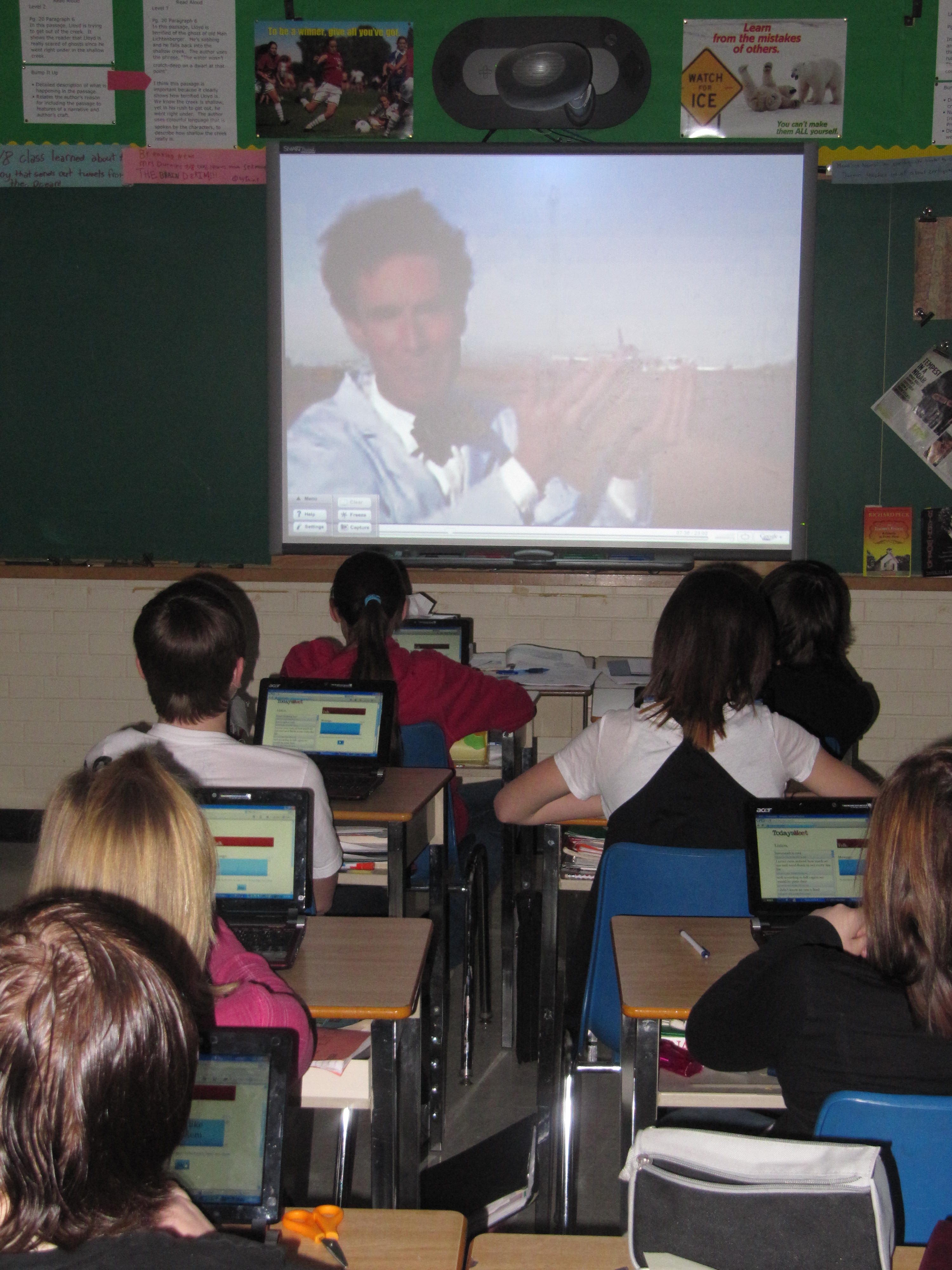
TodaysMeet is a free and secure site you can set up for your students to meet and backchannel.  It’s easy to monitor and sign up.  A major concern of any teacher (myself included) is that students would just chat and not focus on the lesson.  Before we began, my students understood that all comments posted were visible to me along with their username and time.  They were reminded of the appropriate use of technology and the importance of staying on topic.  We discuss this routinely throughout the year as they use Google Apps, wiki sites and blog comments, so I trusted they were ready.

When signing up for a meeting in TodaysMeet, you’re asked to provide a class name (I used TCPS) and then given a url.  I posted the url on our class wiki for easy access.  After the meeting, the transcript is available to print if needed, and it stays posted for however long you specify (up to a year maximum).

Before logging in, students were given the following instructions:  “While viewing the science video, post comments on what surprised you and questions you have.”  Students entered their TS#, typed hello, and jumped in.  Maximum message is 140 characters.

As the conversation continued, students collaborated by helping each other with answers to questions.  They connected their learning to other subject areas.

I was surprised that air was a fluid. ts02 at 9:11 AM, 29 Mar 2010 via web

So this also causes earthquakes? ts19 at 9:15 AM, 29 Mar 2010 via web

Its convection. ts28 at 9:15 AM, 29 Mar 2010 via web

That’s like our geography.ts41 at 9:15 AM, 29 Mar 2010 via web

How does such a little substance like fluid, move the earth to create earthquakes? TS30 at 9:16 AM, 29 Mar 2010 via web

Well earthquakes involve magma because they start way down in the earth’s crust. Magma is fluid. ts43 at 9:17 AM, 29 Mar 2010 via web

When the video was finished, I asked students to post their thoughts on the process of backchanneling.

Backchanneling helped because if I had a question during anything, people can share opinions or answers. ts36 at 9:30 AM, 29 Mar 2010 via web

Back channeling let us all contribute our thinking, without being loud. We got to see other’s opinion, and it let us help each other. Ts29 at 9:30 AM, 29 Mar 2010 via web

Backchanneling was helpful because some of the people in the class said things that I didn’t even think about. Ts45 at 9:29 AM, 29 Mar 2010 via web

Backchanneling was helpful because it shared questions and things that surprised people that I might have forgotten or not even have thought. ts14 at 9:29 AM, 29 Mar 2010 via web

Back channeling is the best.  It helps me to say what I think during the movie so I don’t forget. ts11 at 9:28 AM, 29 Mar 2010 via web

Backchanneling provides insight to the teacher for next-step lesson planning.  Transcripts posted on a wiki could be reviewed by students who miss class.  As well, the conversation could be continued.  Comments from my own students show that backchanneling is another example of the importance of collaborative learning and the engagement factor of technology.

Bored of Book Reports? Go Glogster!

No need to fear the groans from your students after assigning the dreaded “book report”.  This month, my Gr. 7/8 students enjoyed discovering and using Glogster EDU for their summative book club assignment. Just the name alone was enough to pull them in, but after showing them an example Glogster I created one snow day based on our class read aloud novel, they were sold.  I was entertained while marking.

Grad photo day and Glogster
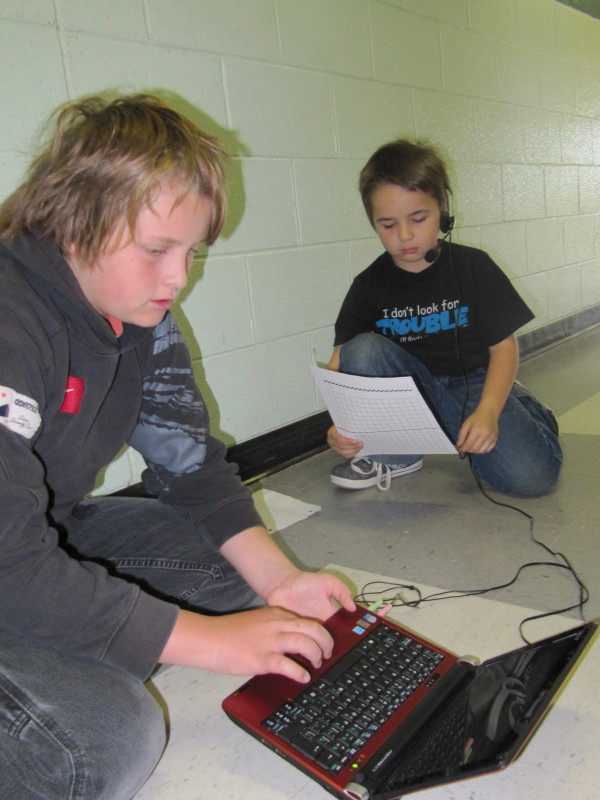
Using the webcam and netbooks, students create their “poster” book report.

Glogster is a virtual poster.  It’s a safe and secure site, offering free classroom accounts which your students can access from home.  Users can post pictures, videos, webcam and audio segments, sounds and text.  There’s something for everyone.  I’ll stop writing.  They can show you better than I can tell you.  Take a look at a few from TS30 and TS11 based on the project outline.